Compound comparison · 6 min read
BPC-157 vs TB-500: How the Two Research Peptides Differ
BPC-157 and TB-500 compared on origin, sequence, molecular weight, CAS number and how to confirm identity on a COA. A chemistry-first reference for researchers.
BPC-157 and TB-500 are two of the most frequently ordered research peptides, and they are often discussed together or supplied as a blend. Chemically they have little in common. This page compares them as materials: where each sequence comes from, how big each molecule is, and what to look for on a COA.
At a glance
| BPC-157 | TB-500 | |
|---|---|---|
| Length | 15 amino acids | 7 amino acids (acetylated) |
| Sequence | GEPPPGKPADDAGLV | Ac-LKKTETQ |
| Origin of sequence | Partial sequence of a protein isolated from gastric juice ("body protection compound") | Residues 17–23 of thymosin β4, the actin-binding region |
| Molecular formula | C62H98N16O22 | C38H68N10O14 |
| Molecular weight | 1419.5 g/mol | 889.0 g/mol |
| CAS number | 137525-51-0 | 885340-08-9 |
| Typical ESI-MS ion | [M+2H]2+ ≈ 710.8 m/z | [M+H]+ ≈ 890.0 m/z |
BPC-157
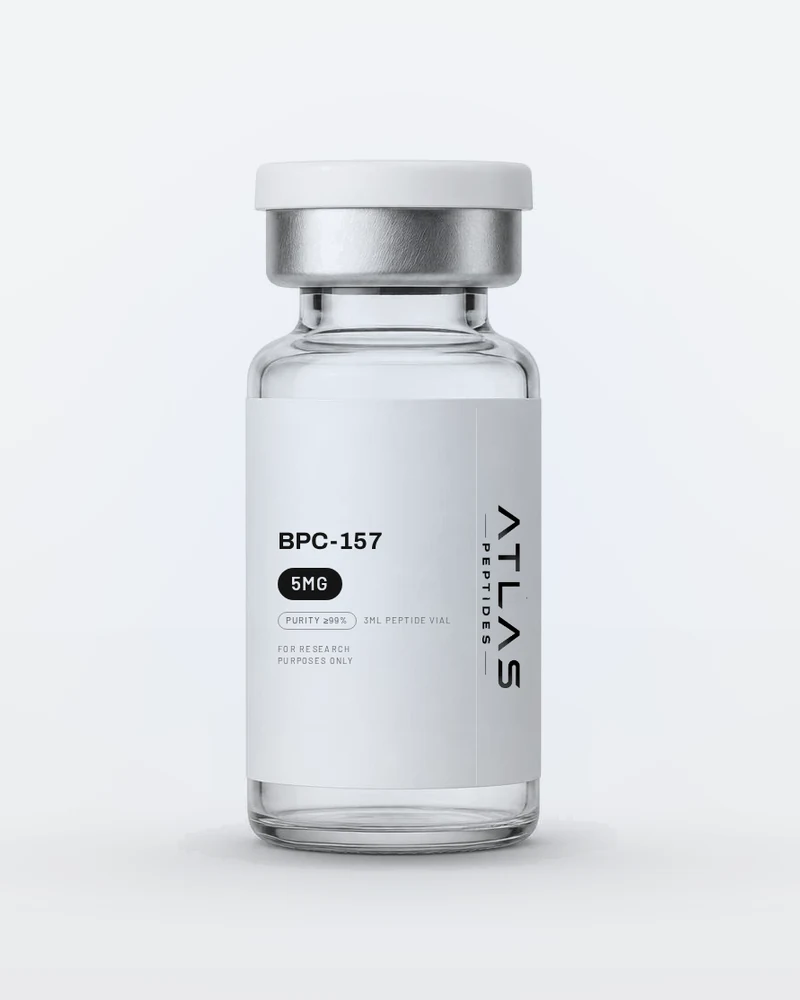
BPC-157 is a synthetic pentadecapeptide. Its sequence was taken from a larger protein first described in gastric juice, and the name comes from "body protection compound". It is one of the most cited peptide fragments in preclinical literature, nearly all of it in cell and animal models. As a material it is a stable, water-soluble lyophilized powder. See Atlas BPC-157 and its lot COAs.
TB-500
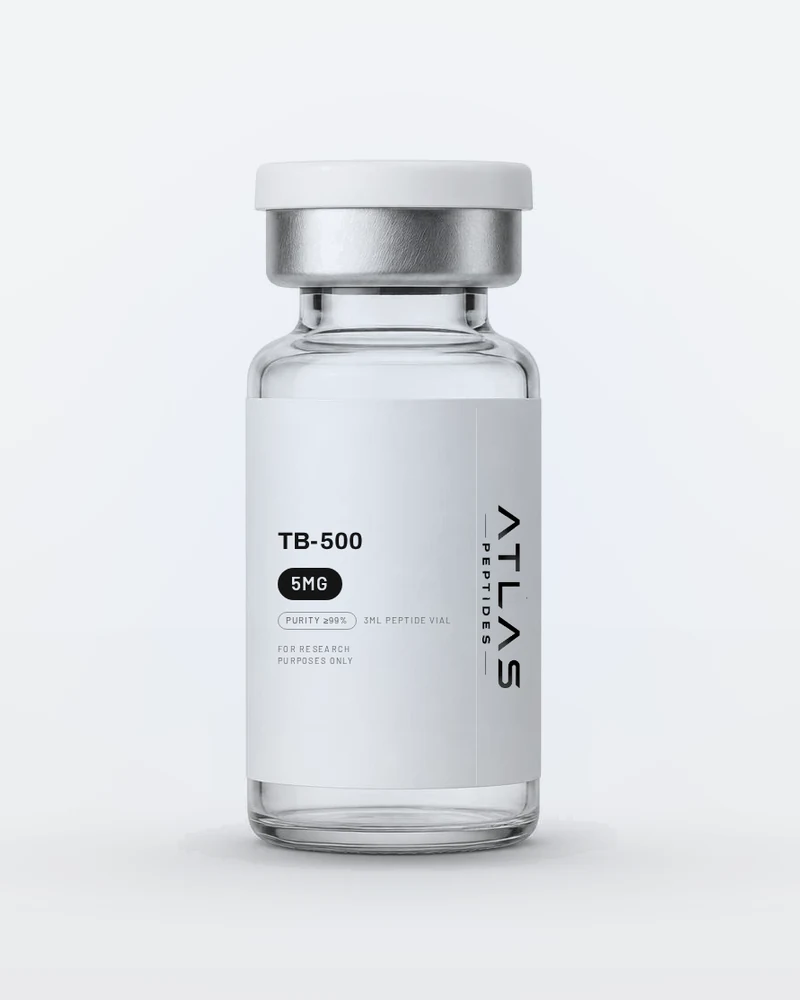
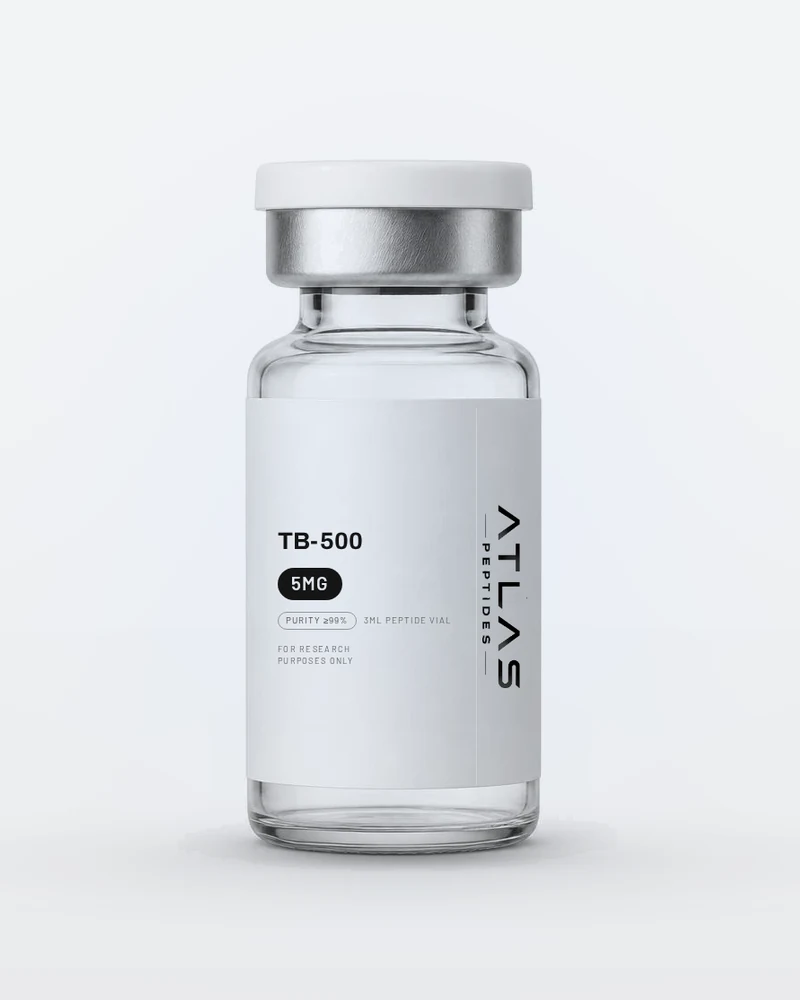
TB-500 is the name used in the research market for a synthetic acetylated heptapeptide matching residues 17–23 of thymosin β4 (Tβ4), a 43-residue protein of about 4.9 kDa. That short region is the part of Tβ4 associated with actin binding in the literature on the parent protein. Some suppliers sell full-length thymosin β4 under the same name, which is why the next section matters. See Atlas TB-500.
Confirming which molecule you have
Because "TB-500" can describe two very different molecules, the mass-spec section of the COA is the place to look. The fragment shows a singly charged ion near 890 m/z; full-length Tβ4 shows a series of multiply charged ions that deconvolute to roughly 4,960 Da. For BPC-157, the doubly charged ion near 710.8 m/z is typical with electrospray methods. Observed and theoretical masses should agree within about 0.1%. Our COA guide covers how to read these numbers.
Why the two are sold as a blend
Pre-combined vials save a researcher from weighing two powders separately when an experiment calls for both compounds. A blend should still come with a report that identifies each component and gives the amount of each. Atlas supplies a BPC-157 / TB-500 blend and larger multi-compound blends, each with its own lot COA; see how to read a blend COA.
Storage
Both are supplied lyophilized and share the same handling: -20 °C for long-term storage, 2–8 °C short term, protected from light and moisture. Details are in our storage guide.
Compounds in this guide

BPC-157
TB-500
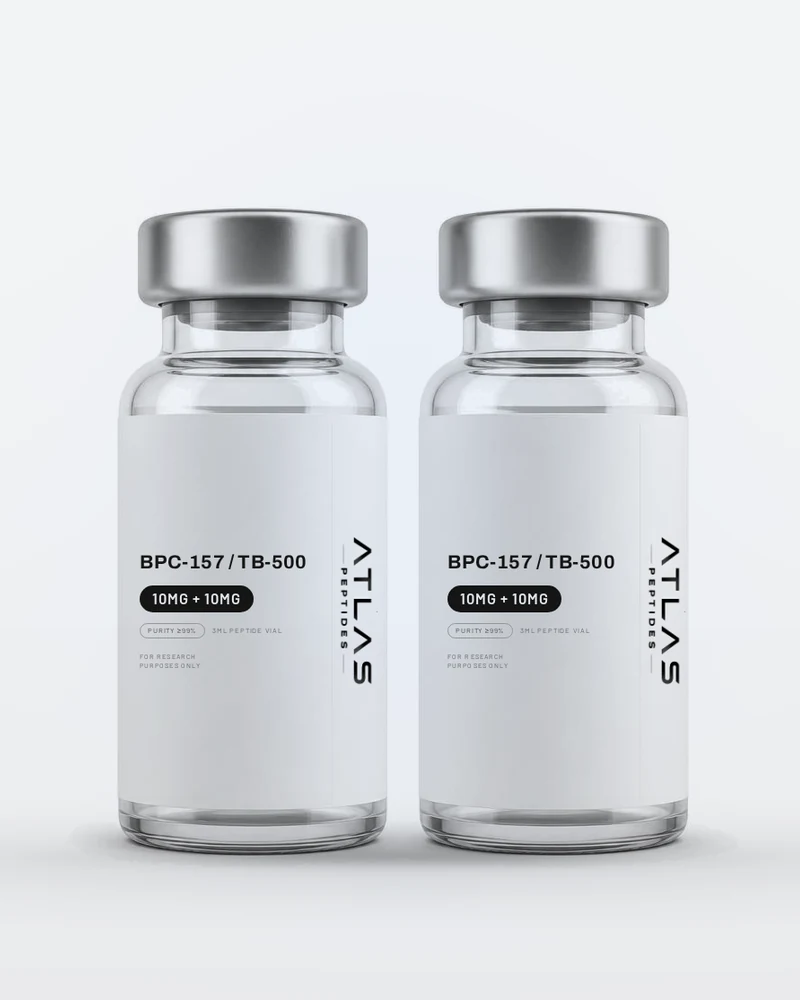
BPC-157 / TB-500 Blend
GHK-Cu / TB-500 / BPC-157 Blend
Keep reading
- Where to Buy Research Peptides Online: A 7-Point Supplier Checklist
- What Is GHK-Cu? The Copper Peptide Explained for Researchers
- Peptide Blends: How to Read a Multi-Peptide COA
Research use only. For Research Use Only. Not for human or veterinary use. Not for diagnostic or therapeutic use. Not a drug, food, cosmetic or dietary supplement. Not for resale to consumers.