Compound comparison · 6 min read
MOTS-c vs NAD+: Two Mitochondrial Research Compounds Compared
MOTS-c is a 16-residue mitochondrial-derived peptide; NAD+ is a dinucleotide coenzyme. How the two compare on structure, molecular data, stability and what to check on a COA.
MOTS-c and NAD+ both show up in mitochondrial research, and both sit in our cellular research category, but they are very different materials. One is a peptide encoded by mitochondrial DNA; the other is a small coenzyme found in every living cell. This guide compares them as chemicals: what each one is, how big it is, how it behaves in the vial and what its COA should show.
At a glance
| MOTS-c | NAD+ | |
|---|---|---|
| Compound class | Peptide, 16 amino acids | Dinucleotide coenzyme (not a peptide) |
| Sequence / structure | MRWQEMGYIFYPRKLR | Nicotinamide mononucleotide joined to AMP by a pyrophosphate bridge |
| Molecular formula | C101H152N28O22S2 | C21H27N7O14P2 |
| Molecular weight | 2174.6 g/mol | 663.4 g/mol |
| CAS number | 1627580-64-6 | 53-84-9 |
| Origin | Short open reading frame in the mitochondrial 12S rRNA gene | Ubiquitous cellular coenzyme; oxidized partner of NADH |
MOTS-c
MOTS-c (mitochondrial open reading frame of the 12S rRNA type-c) was first described in 2015 by Changhan Lee and colleagues. It belongs to a small family of mitochondrial-derived peptides, sequences encoded within the mitochondrial genome rather than the nucleus. Research on it is recent and almost entirely preclinical, in cell and animal models.
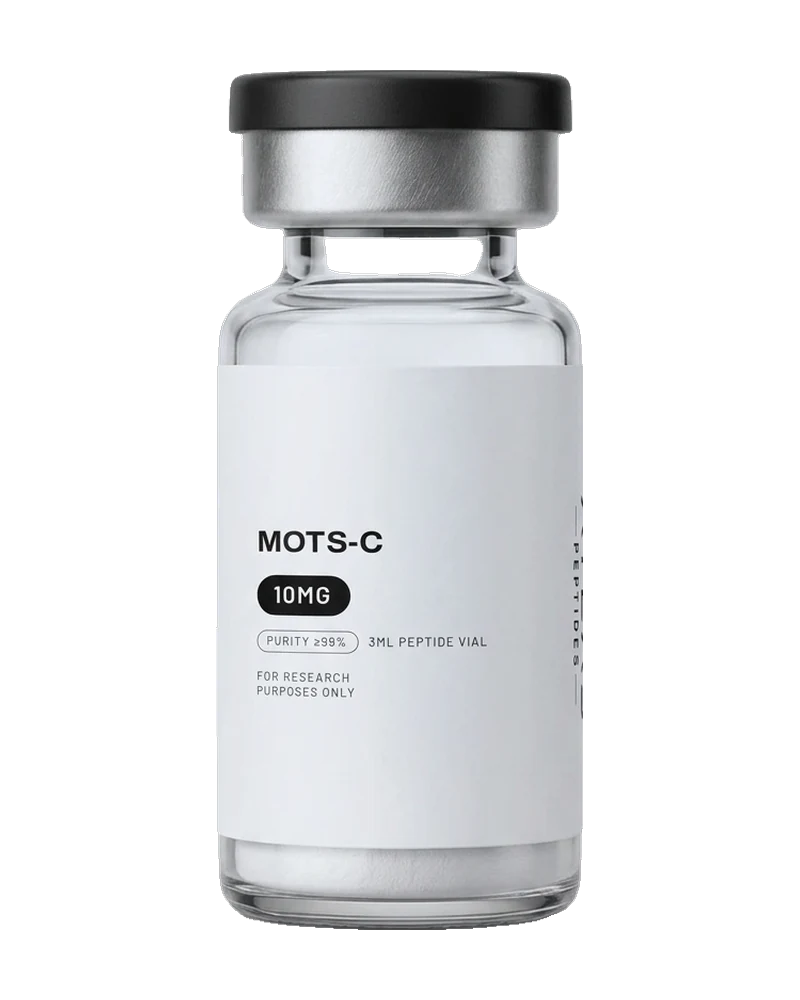
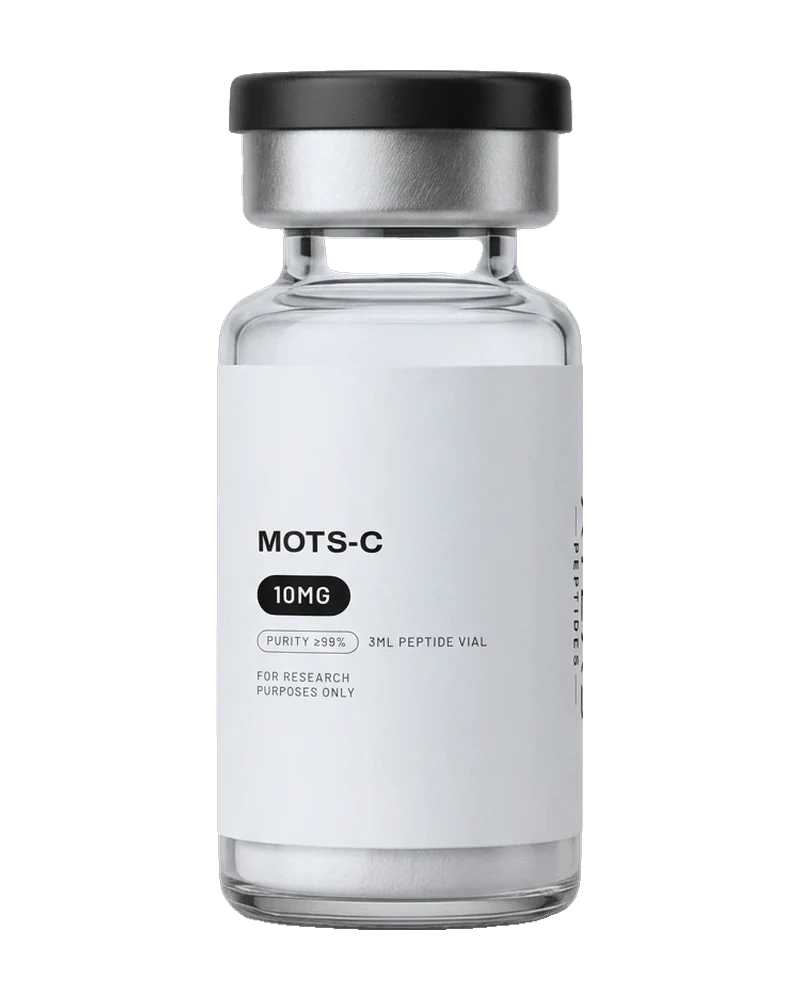
As a material, MOTS-c is a 16-residue peptide with two methionines and a tryptophan. Those residues are the ones most prone to oxidation, so storage matters: keep the lyophilized vial sealed, cold and dark. See Atlas MOTS-c.
NAD+
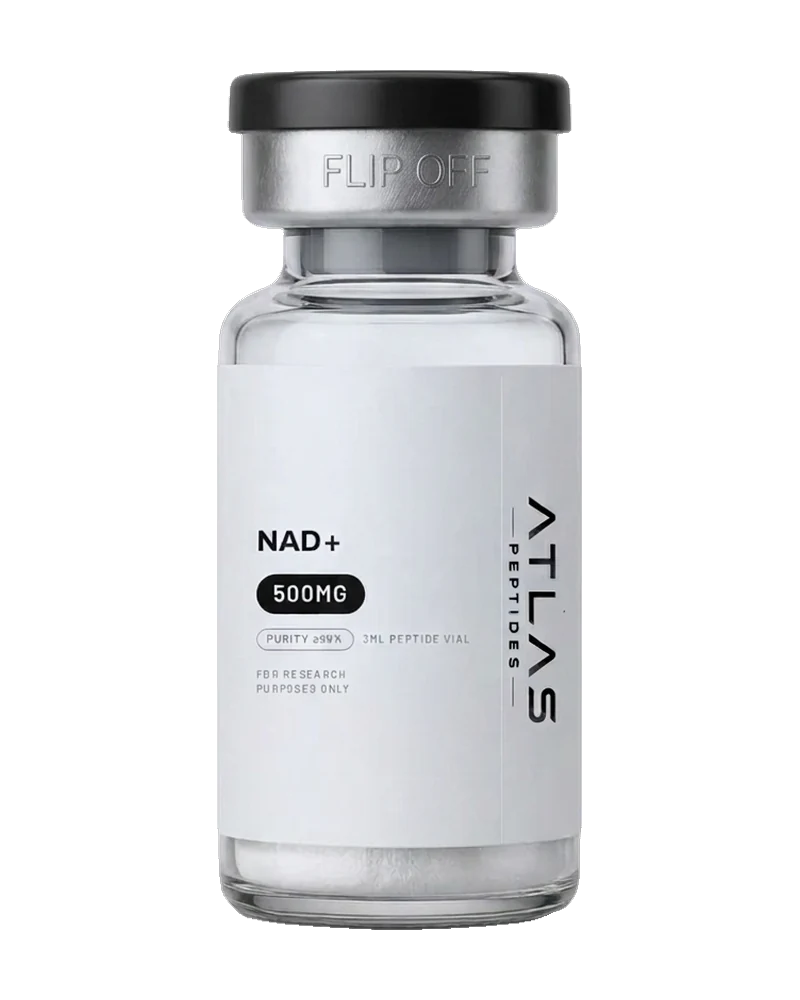
Nicotinamide adenine dinucleotide is a coenzyme that carries electrons in redox reactions, alternating between its oxidized form (NAD+) and reduced form (NADH). It is also consumed as a substrate by several enzyme families. It is one of the most studied small molecules in biochemistry.
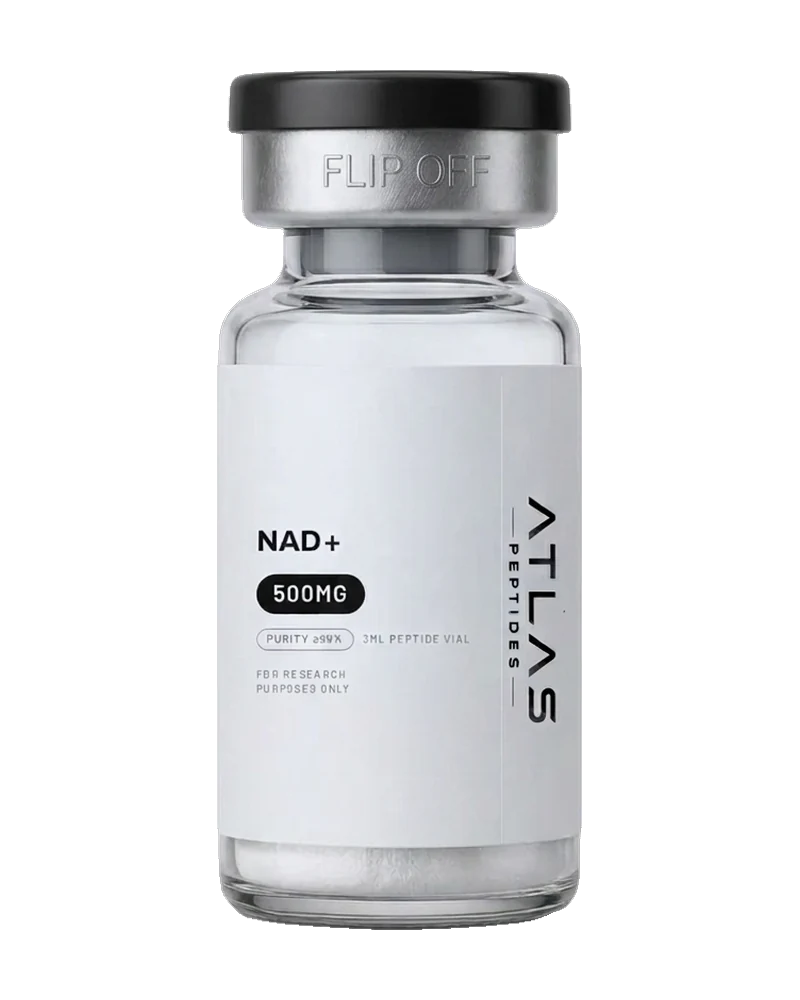
The powder is hygroscopic and sensitive to light and heat, especially once in solution, where it slowly degrades. Keep the vial sealed and frozen until use. See Atlas NAD+.
What to look for on each COA
- MOTS-c: RP-HPLC purity with the chromatogram, and mass-spec identity. With electrospray, look for multiply charged ions (around 1088 m/z for [M+2H]2+ and 726 m/z for [M+3H]3+). A side peak about 16 Da heavier usually means oxidized methionine.
- NAD+: HPLC purity, identity by mass (about 664 m/z for [M+H]+), and ideally a check that the sample is the oxidized form rather than NADH, which absorbs at 340 nm where NAD+ does not.
- Both: a lot number that matches the vial. Our COA guide explains each field.
Storage side by side
Both are supplied lyophilized and both belong at -20 °C for long-term storage, protected from light and moisture. Let the sealed vial reach room temperature before opening so condensation doesn't form on the powder. More in the storage guide.
Compounds in this guide
Keep reading
- Semax vs Selank: Two Heptapeptide Analogs Compared
- How Research Peptides Are Tested: HPLC, Mass Spec and Beyond
- Where to Buy Research Peptides Online: A 7-Point Supplier Checklist
For Research Use Only. Not for human or veterinary use. Not for diagnostic or therapeutic use. Not a drug, food, cosmetic or dietary supplement. Not for resale to consumers.